Eusthenes brinae Yang, 1935
male
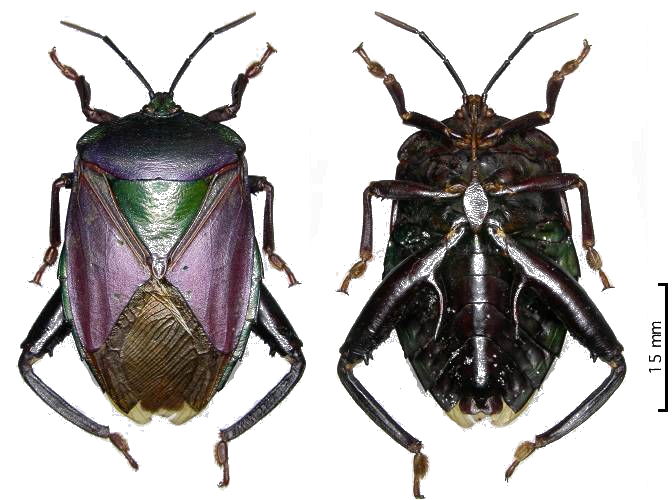
female
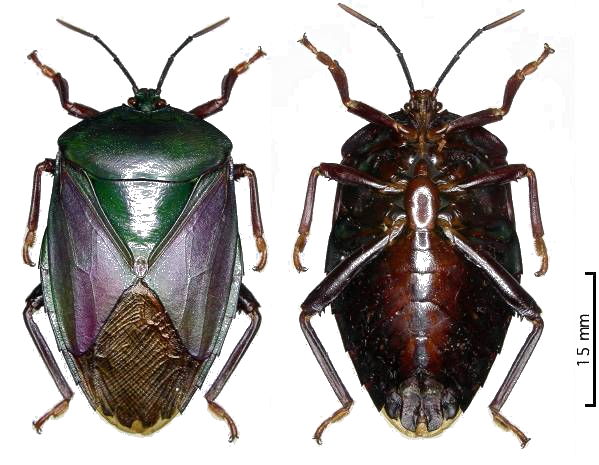 Specimens data: Cameron Highlands, Malaysia, nov. 2002 (©PMPF)
comments: the color of some Tessaratomidae and particularly
Eusthenes seems to have physical origin. In
the wild
Eusthenes sp. have resplendant metallic greenish colors, as can be seen
here under on the picture made by Paul Aston from Hong Kong but in the collection
they are dull dark castaneous (purplish castaneous in the case of
E. brinae). The
specimens here above have just been humidified to be arranged for
photography, and have partly regained their metallic tinge. It
is possible to increase a little more this tinge on collection
specimens as one can see hereunder on the picture of the same
male specimen, after its back has been immerged in water with
alcohol and wetting product for half an hour. This leads to the
hypothesis that the color of Tessaratomidae is in relation with
the thickness of a transparent external layer of cuticle which
is reduce to almost nothing (at least less than the wawelength
of visible light) when dry; This would explain why, when
humidified, the specimens colour go from purplish castaneous to
purple, blue green and green.
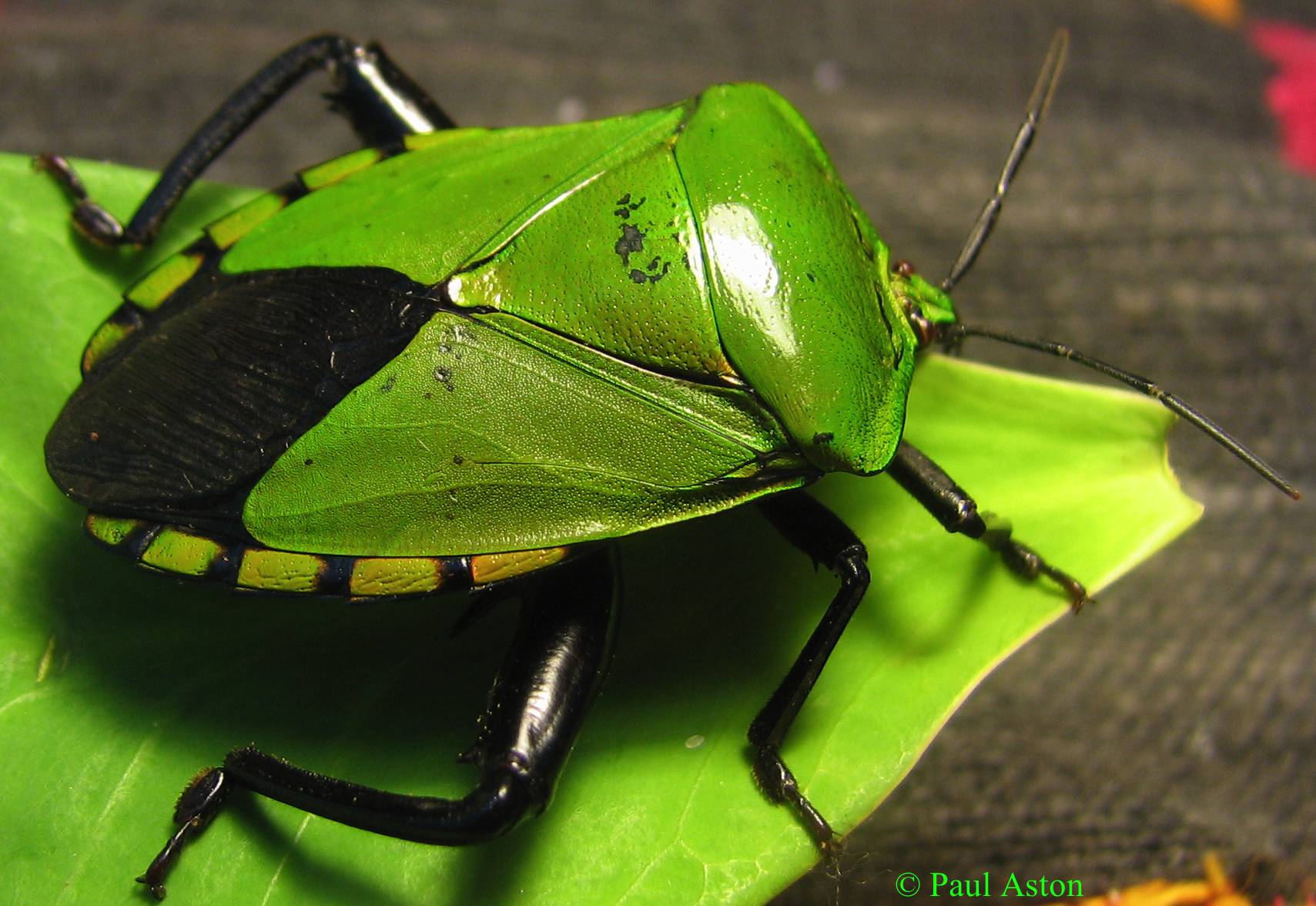
click on the picture to access full size picture
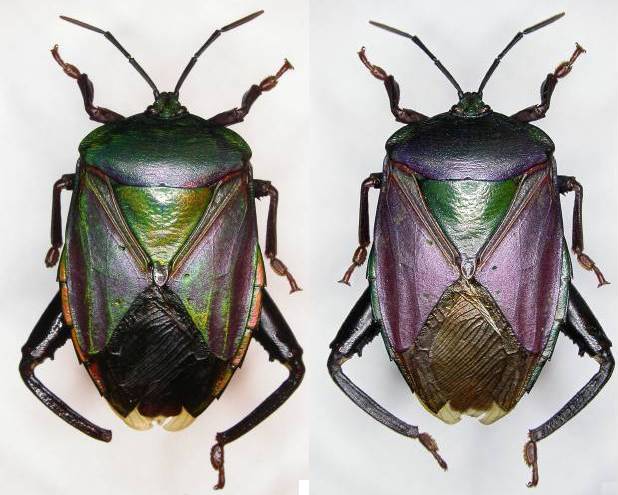
left, after immersion in water with moistening agent, right after normal moistening for preparation
references:
Yang We-I 1935
Blöte H. C. 1945